Day 9 - Leon to Astoria to Molineseca
A different start to the day today. We are leaving the plateau of the Meseta and entering the mountains of the Montes de Leon. My planning for this stage from Leon has been poor and it was scheduled to be 60 miles and well over 3,500 feet of climb. I felt this to be too much for a number of reasons. Derek’s knee, although much better, might prove problematic on such a day; the forecast was for very high winds; it is tough, and, as a consequence, the day might not be fun and we would arrive in the beautiful village of Molineseca very late and too tired to enjoy it. I needed a Plan B. It turns out there is one train from Leon to Astorga, that will take cycles, at 07:05. Astorga is on our route and is where the real climbing starts. Taking this option cuts out more than is ideal - reducing the day to 32 miles but still leaves a big climb (>10% in places and 22 miles long) up to the Cruz de Ferro.

The plan went well and we caught the train with no problem. We were the only passengers and we grabbed breakfast as soon as we arrived in Astorga.
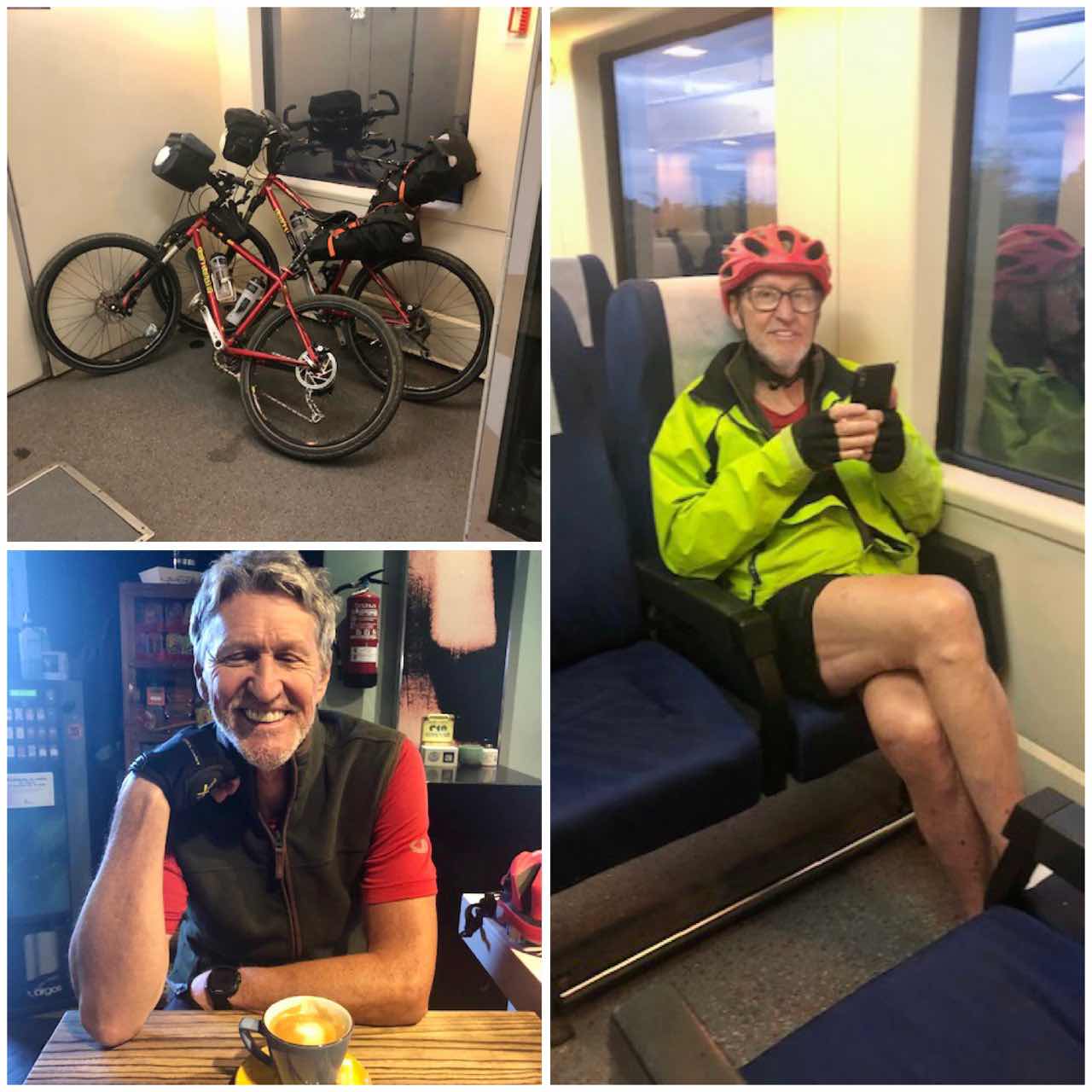
Astorga is a largish town with wonderful architecture, especially The Bishop’s Palace (another Gaudi spectacular) and the Cathedral.

The road and path wound its way, always rising, through the small villages of Murias de Rechivaldo, Castillo de Los Polvazares, Santa Catalina se Samoza, El Ganso, Rabanal del Camino, and Foncebadón for whom the Camino was clearly the major source of income. They all had primarily small bars and Albergues and must have really suffered during the pandemic. Unlike the heavily agricultural plains this is an landscape of trees and scrub. We stopped to catch our breath (and have a coffee and later beer/wine) at several.
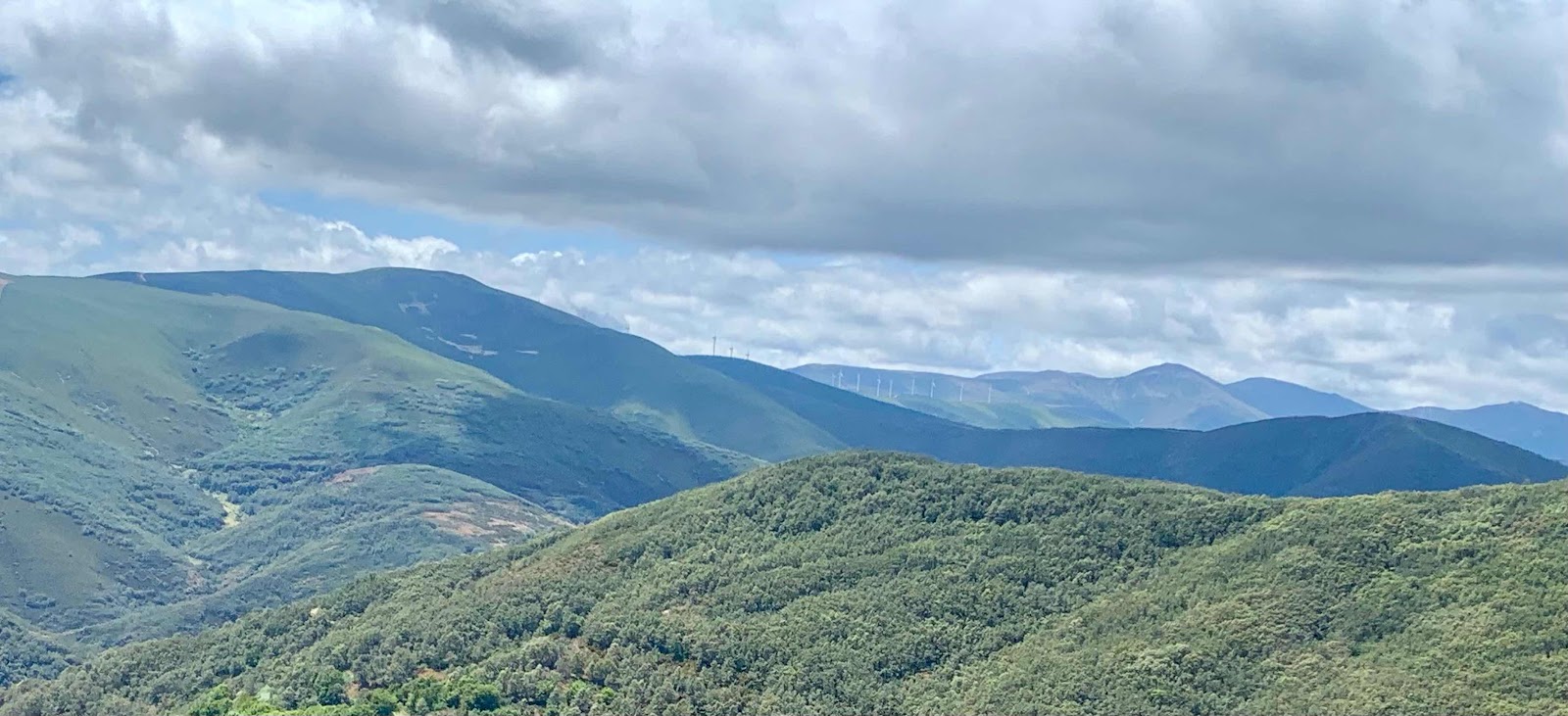
The scenery in the mountains is spectacular and impossible to adequately capture in photographs.

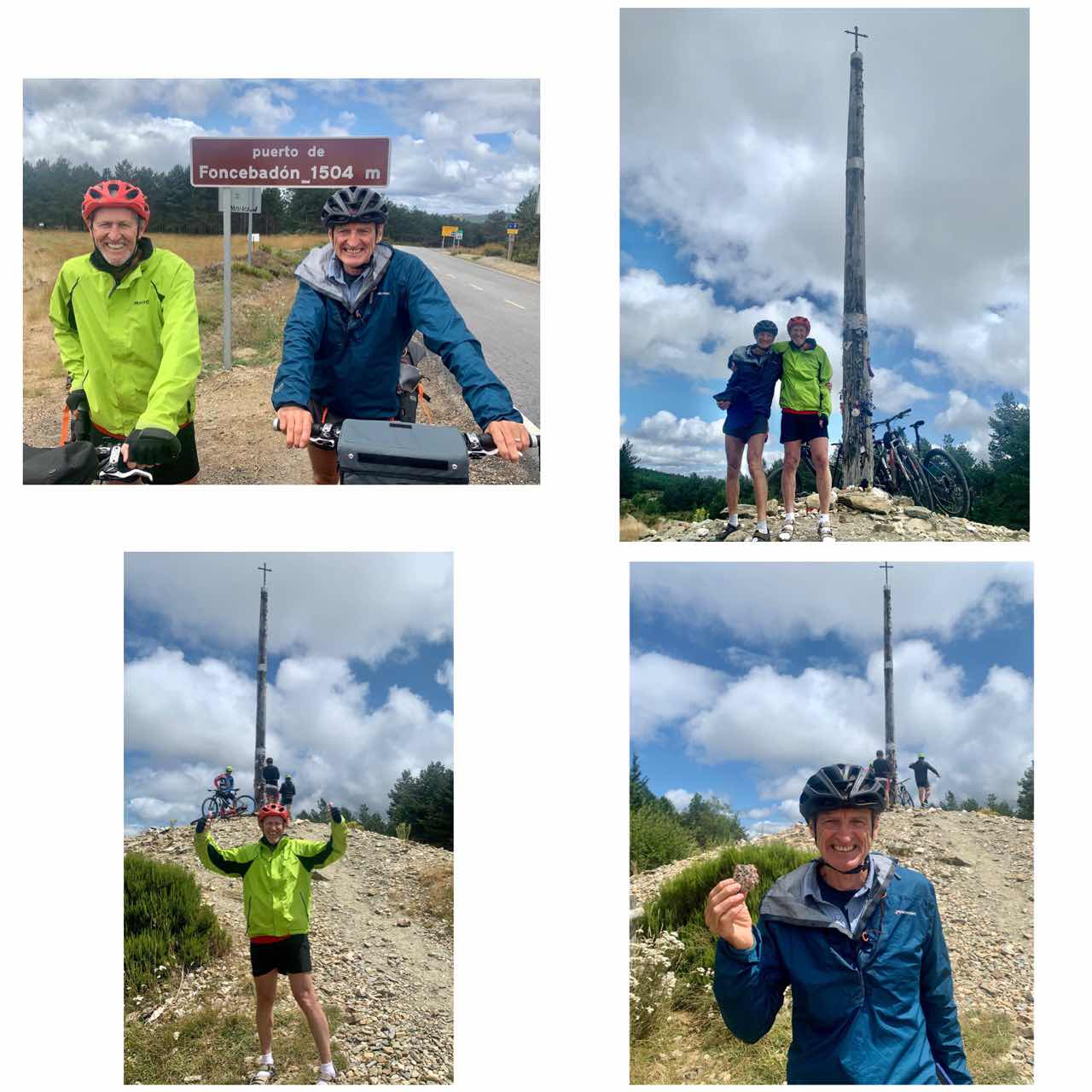
The road undulates with some steep parts at the top until the tiny, and Spartan, Albergue at Manjarin. It is famous for its remoteness, lack of heating and water, it’s signposts at the entrance to many parts of the world and it’s welcome for pilgrims staying there (bottom right picture below).

Finally we arrived in the wonderful small town of Molineseca. Almost Alpine, not Spanish, in character. The sun came out. Our hotel was perfectly located by the bridge. In the river people were swimming. Tired but triumphant we showered and enjoyed the sights and refreshments offered.


This is what we agreed to do. Only the pretty bridge at Hospital de Orbigo was a sightseeing casualty of the change. Lots of pictures and text in the blog today (and there could have been more) as the change to the mountains gave many more photo opportunities than the rather similar vistas of the Meseta.
This is the new profile.
The plan went well and we caught the train with no problem. We were the only passengers and we grabbed breakfast as soon as we arrived in Astorga.
Astorga is a largish town with wonderful architecture, especially The Bishop’s Palace (another Gaudi spectacular) and the Cathedral.
The road and path wound its way, always rising, through the small villages of Murias de Rechivaldo, Castillo de Los Polvazares, Santa Catalina se Samoza, El Ganso, Rabanal del Camino, and Foncebadón for whom the Camino was clearly the major source of income. They all had primarily small bars and Albergues and must have really suffered during the pandemic. Unlike the heavily agricultural plains this is an landscape of trees and scrub. We stopped to catch our breath (and have a coffee and later beer/wine) at several.
Weather not quite as forecast. The high and adverse winds were present but not the sunshine. Cloudy with patches of blue for most of the day. Our clothing throughout the blog shows it was cold except in a sheltered bar when the sun came out (Derek got into his extra layers shortly after the pic!)

Foncebadón is the last village before the iconic Cruz de Ferro (Iron Cross) which is located at the Pass of Foncebadón which marks the highest point on the Camino. At 1,504m (4,934 ft) it is 12% higher than highest mountain in Great Britain. The tradition is to carry a rock from your home and place it on the pile. I picked up a lovely red granite and quartz stone on the beach on the island of Iona (itself a holy site) when on holiday in Scotland and carried it to this holy site. It seemed fitting.
The scenery in the mountains is spectacular and impossible to adequately capture in photographs.
The road undulates with some steep parts at the top until the tiny, and Spartan, Albergue at Manjarin. It is famous for its remoteness, lack of heating and water, it’s signposts at the entrance to many parts of the world and it’s welcome for pilgrims staying there (bottom right picture below).
The road thereafter is much steeper than the climb up. The footpath would be crazy for cycles, It descends for more than 3,000 feet in seemingly endless bends. Halfway down is the only village before the valley floor - El Acebo - a one cobbled-street hamlet entirely dedicated to the Camino where I have now stopped for an ice cream on three separate Caminos.
Finally we arrived in the wonderful small town of Molineseca. Almost Alpine, not Spanish, in character. The sun came out. Our hotel was perfectly located by the bridge. In the river people were swimming. Tired but triumphant we showered and enjoyed the sights and refreshments offered.
For dinner Derek bravely picked Botillo del Bierzo pictured below. Check out the link! He made a good attempt at it. Thereafter a nice bar for the usual Patxaran before bed. An easy day in prospect tomorrow.
Comments
Post a Comment